
Nondestructive Testing
Welding Inspection
Plant Inspection including Corrosion Inspection
Third-party Inspection
Special Process House Services
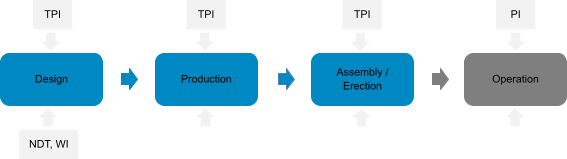
Properly timed inspections of the production process (i.e., at minimum during the design, manufacturing, and dispatch stages) are essential to verify compliance with pre-agreed requirements. ATG is capable of ensuring inspections throughout all stages of production to confirm the manufacturer’s compliance with all customer and statutory requirements.
Products in operation may gradually lose functionality over time or may incur increased risks during use. Through in-service and maintenance inspections, ATG is able to verify compliance with the expected level of performance and, upon request, assess the remaining service life of industrial equipment.
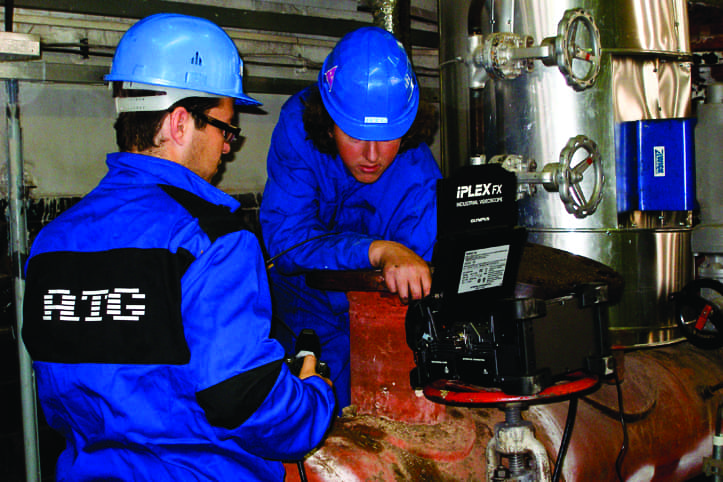
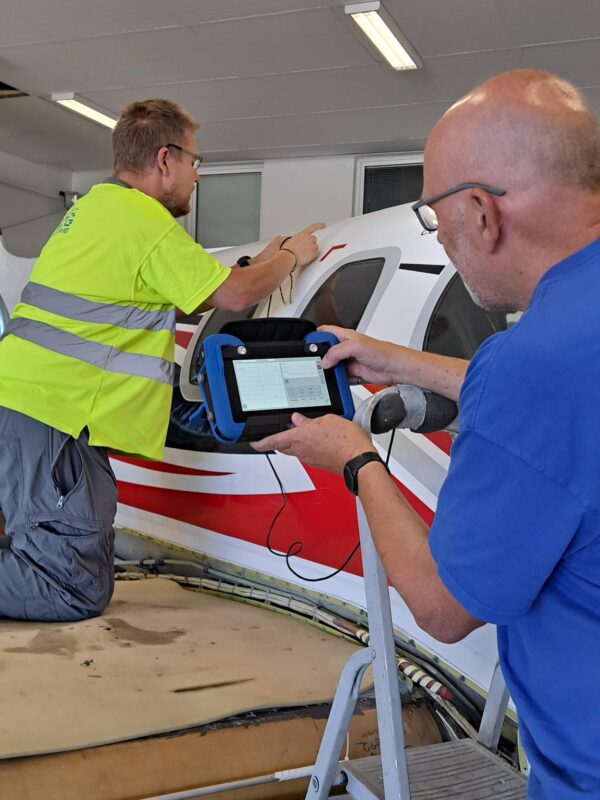
Product quality directly influences safety and lifecycle cost. For this reason, NDT testing performed by certified Level 2 personnel plays a decisive role in modern production systems.
ATG provides Level 2 inspection services capable of handling both high-volume industrial testing and highly specialized examinations. Our inspectors are experienced in evaluating results, interpreting indications, and issuing compliant inspection reports adherent to customers’ documentation systems.
Welding is considered a critical special process because its output cannot be fully verified by subsequent inspection alone. Therefore, systematic supervision and verification throughout every welding stage are essential.
ATG provides welding inspection services aligned with ISO 14731 requirements. The welding coordination process ensures that planning, qualification, execution and inspection are performed under controlled conditions.
Independent welding inspection significantly increases the probability that the final product will meet mechanical, structural, and safety standards. Close integration between welding inspection and nondestructive testing ensures process coherence, transparency, and traceability.
Poor weld accessibility and design flaws can make proper welding and inspection nearly impossible.
Design complexities; such as inaccessible joints
Improperly designed connections present significant problems during production
Missing technical detail or lack of clarity in design requirements from the customer’s documentation
Photo: Example of a not manufacturer friendly design – Required all around joints with limited access created many challenges
Industrial equipment operating under pressure, temperature or chemical exposure is subject to gradual degradation. Without periodic inspection, such degradation may lead to leaks, structural failure or serious safety incidents.
ATG performs plant inspection and corrosion inspection focused on determining actual equipment condition, identifying active damage mechanisms and evaluating degradation rates.
Third-Party Inspection (TPI) plays a crucial role not only in heavy industry but also in chemical, food, pharmaceutical, and other sectors.Accurate detection significantly reducing risks, potential consequences, and overall project costs. It is essential to distinguish between TPI organized by the manufacturer (notified or authorized bodies) and independent TPI conducted on behalf of the client.
Ongoing as well as final inspections performed by qualified personnel — particularly client-appointed TPI — are strongly recommended to ensure quality, compliance, and transparency throughout the project lifecycle. Independent third-party inspections provide objective and unbiased results for all contracting parties.
ATG relies on highly qualified inspectors holding certifications such as NDT Level 2 and 3, ASME/PED, Aramco approvals, IWI/CWI, IWE, and others.Consistently ensuring the highest professional standard of inspection services.
Special processes such as nondestructive testing often represent high added value but also significant implementation complexity. In sectors like aerospace and advanced manufacturing, internal implementation may require customer approvals and accreditations such as PRI NADCAP.
For many companies, building a fully approved internal NDT department may not be economically efficient due to investment in equipment, personnel qualification requirements, and quality system adaptation.
ATG then provides complete special process outsourcing. As a qualified supplier, we deliver the full non destructive testing process including documentation control, certified personnel and compliance with end-user expectations. We also offer cleaning and cleanliness verification services. This procedure is suitable in particular for the cleaning and testing of critical aircraft components, ensuring compliance with stringent aerospace cleanliness standards.
This model allows manufacturers to fulfill supply chain requirements without significant capital investment.
ATG provides complete special process delivery as a supplier solution for a range of companies from Czech Republic, Germany, and Poland.
Special process of cleaning and cleanliness verification was fully implemented by ATG in 2018. The process is primarily focused on cleaning of parts for the new turbopropeller engine Catalyst made by GE Aviation Czech. The process is in full accordance with GE Aviation´s P4TF21 and Safran´s DT55-83 procedures and is especially suitable for cleaning critical engine components.
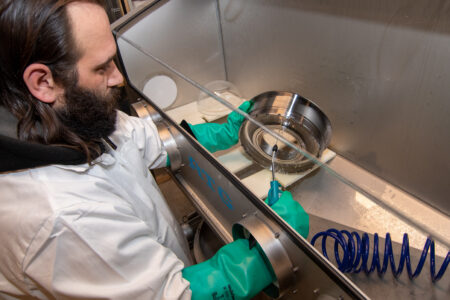
The process is primarily focused on the cleaning of new GE Catalyst turboprop engines manufactured by GE Aviation. It is performed in accordance with the GE Aviation P4TF21 specification and is officially approved under this standard.
Due to the rigorous requirements necessitated by the aerospace industry, this process has the option to be implemented in accordance with Standard EN ISO 16 232, which is used in the automotive industry.
ATG operates under recognized approval systems and regulatory authorizations relevant to the aerospace and industrial sectors. Inspection activities are performed in accordance with internationally accepted qualification schemes and customer-specific approval requirements.
Maintaining these authorizationss ensures that our nondestructive testing, welding inspection, and on-site and in-service plant inspection services comply with the highest industry standards.
Directive 2014/68/EU (PED) / ASME standards for pressure equipment
API 510, 570, 653, and 580 for inspection, maintenance, and repair of in-service equipment
EN 1090 for execution of steel and aluminium structures
A welding inspector should understand which codes and standards apply to the project, product, or jurisdiction in which they are working. These documents define the minimum requirements for design, fabrication, welding procedure, qualification, inspection, testing, and safety protocol.
Inspectors must know how to identify the applicable code or standard, how to interpret technical requirements, acceptance criteria for weld quality, inspection and testing requirements, documentation and traceability rules and safety and regulatory obligations. A competent welding inspector must perform inspections in accordance with the relevant code and ensure compliance throughout the manufacturing process or service life.
The most widely used welding codes and standards include:
AWS (American Welding Society) – publishes standards for welding symbols, filler metals, welder qualification, welding procedures, inspection, and safety, e.g. AWS D1.1 (Structural Welding Code – Steel): the most widely used code for structural steel welding worldwide.
ASME (American Society of Mechanical Engineers) – best known for the Boiler and Pressure Vessel Code and piping standards, used for pressure equipment including boilers and piping systems, e.g. ASME Section IX (Welding and Brazing Qualifications): the key standard for qualification of welders, welding operators, and welding procedures (WPS) for pressure equipment.
API (American Petroleum Institute) – widely used in the oil and gas industry. One of the most well-known standards is API 1104, covering welding of pipelines and related facilities.
These standards ensure safety, quality, reliability, and compliance in industrial welding applications.
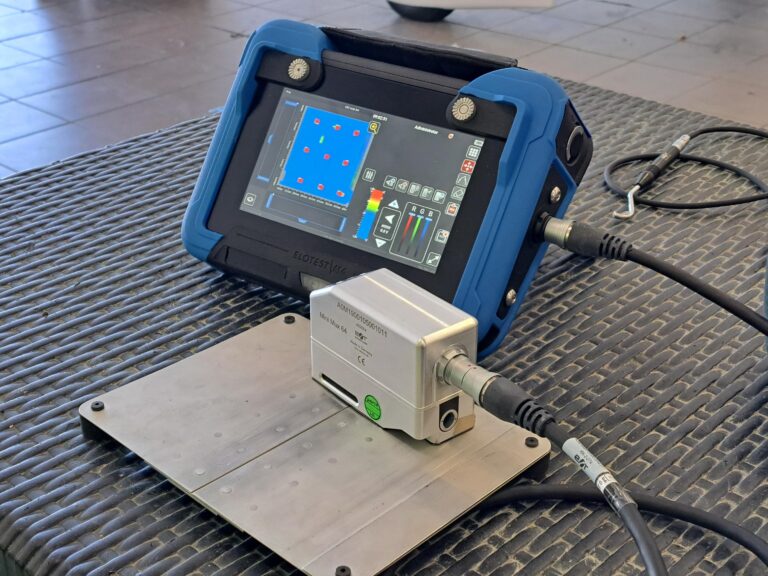
Take a look at our non-destructive testing systems and equipment.